


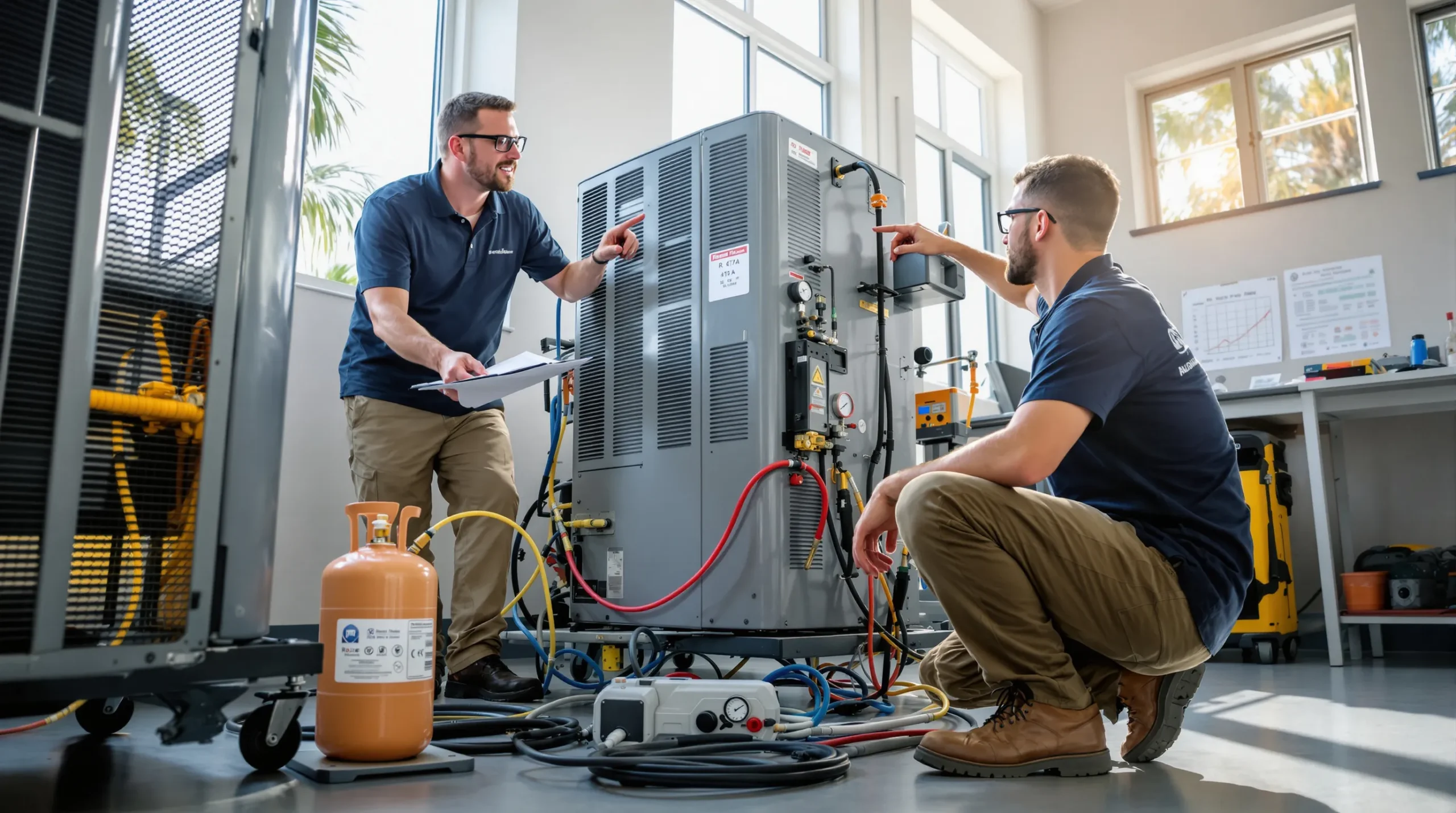
If you’re eyeing a hands-on career that stays in demand year-round, air conditioning courses are a smart bet. Whether you want to get job-ready fast or build toward advanced HVAC credentials, the right program blends core theory with lab time so you can troubleshoot real systems with real tools. In this guide, we’ll unpack what you learn, how different course formats work, what it costs (and how to pay for it), and where the career ladder leads, from residential installs to smart HVAC and energy management. We’ll also share what to look for in a program, using Miami’s CBT Technology Institute as a practical example of a career-focused school with flexible options and strong student support.
What You’ll Learn In Air Conditioning Courses
Core HVAC Principles And Systems
Solid air conditioning courses start with the physics and systems behind the work. You’ll learn:
- Thermodynamics and heat transfer: how energy moves, why pressure and temperature change, and what that means for efficiency.
- Refrigeration cycle: compression, condensation, expansion, and evaporation, plus how superheat and subcooling guide charging.
- Properties of matter and refrigerants: R-410A basics, blends vs. single-component refrigerants, and environmental considerations.
- Electrical fundamentals: circuits, wiring diagrams, motors, capacitors, relays, and safe meter use.
- Heating systems: gas furnaces, electric heat strips, and heat pumps, because most techs service both heating and cooling.
You won’t just memorize terms: you’ll read schematics, trace circuits, and interpret pressure-temperature charts to diagnose issues.
Hands-On Lab Skills, Tools, And Safety
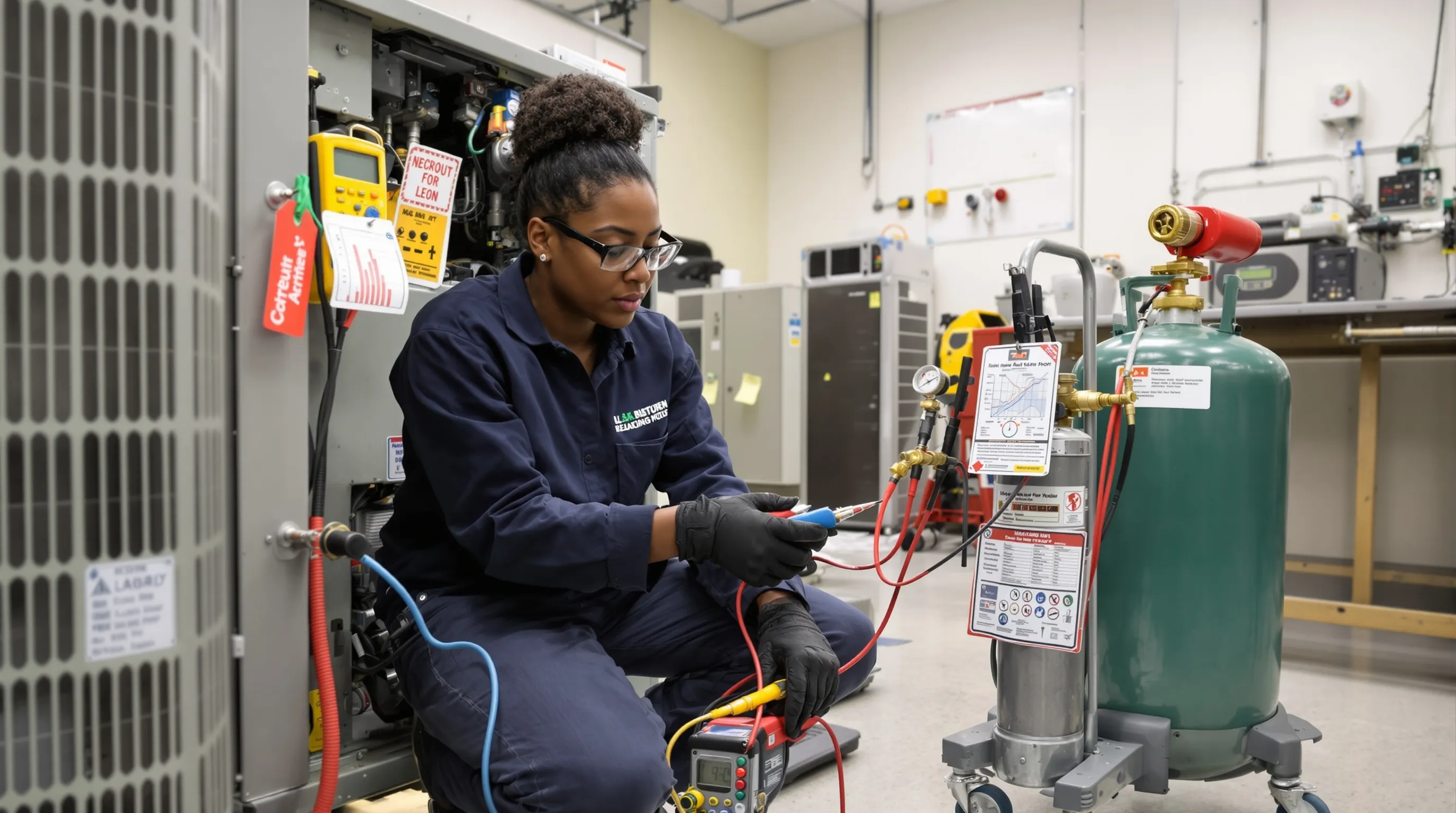
Expect to spend serious time in the lab. A strong air conditioning course puts tools in your hands early:
- Meters and manifolds: measuring voltage, resistance, pressure, vacuum, and temperature accurately.
- Piping and brazing: cutting, flaring, and joining copper safely: nitrogen purging to protect the system.
- Evacuation and charging: pulling deep vacuum, calculating charge, verifying superheat/subcooling.
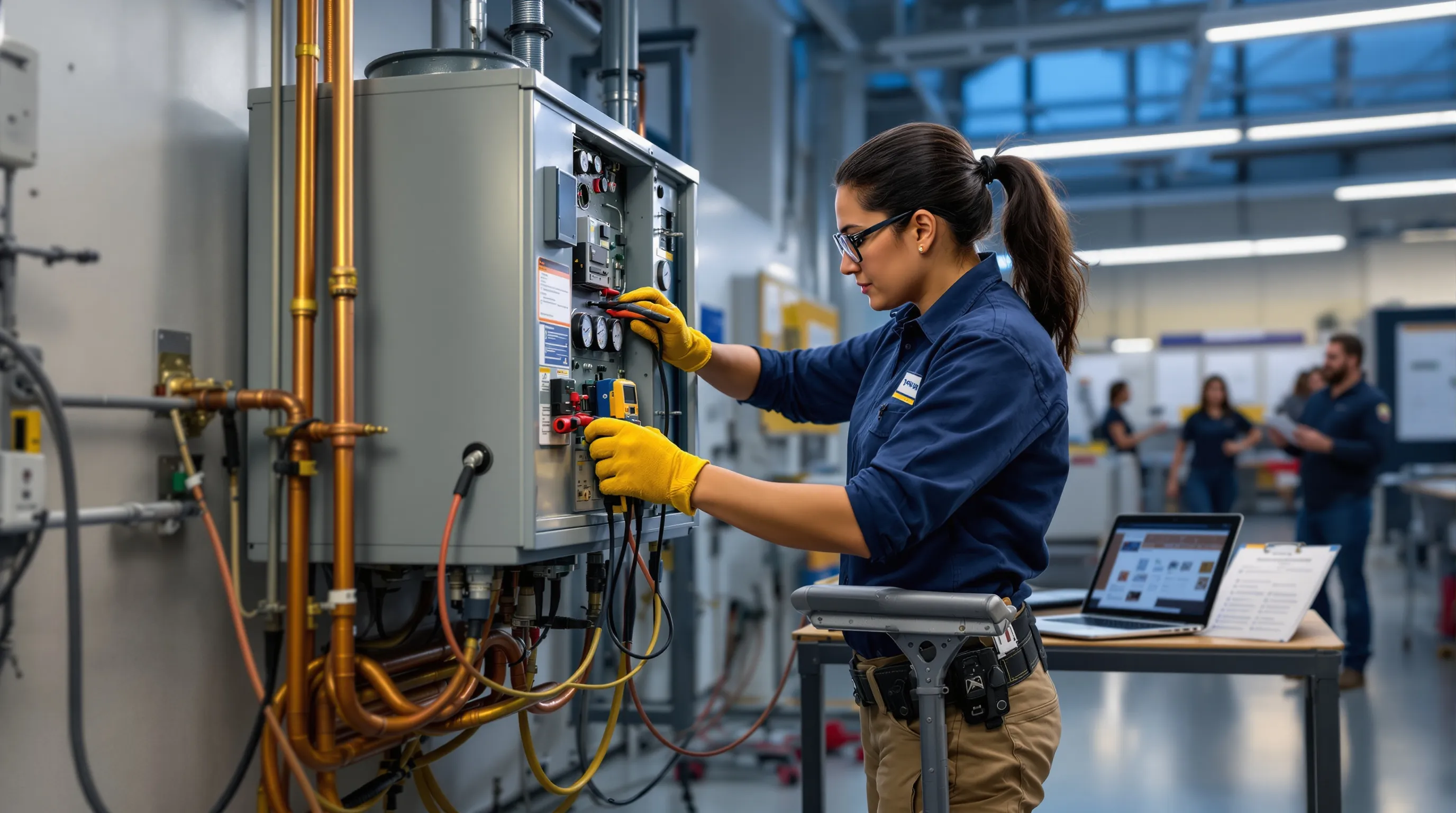
- Mechanical and electrical troubleshooting: compressors, fans, contactors, boards, thermostats, and sensors.
- Controls and airflow: static pressure, duct design basics, airflow balancing, and ECM motor setup.
Safety isn’t a side note. You’ll practice OSHA-aligned procedures, lockout/tagout, ladder safety, and proper handling of refrigerants with recovery machines and approved cylinders.
Industry Certifications Covered (EPA 608, R-410A Basics)
Credible programs align coursework with certification prep:
- EPA 608: mandatory nationwide if you handle refrigerants. Many schools build exam prep into class time and test on campus.
- R-410A basics: safe handling, system differences vs. legacy refrigerants, and charging considerations.
- NATE-ready foundations: while NATE is optional, advanced courses often teach to its core knowledge domains so you can test confidently later.
Course Types, Formats, And Schedules
Short-Term Certificates Vs. Diplomas/Associate Pathways
- Short-term certificates (months): Fast track to entry-level roles like installer helper or maintenance tech. Emphasis on essentials, safety, and EPA 608.
- Diplomas/Associate degrees (1–2 years): Deeper jump into theory, controls, advanced diagnostics, and customer service. Better for long-term growth, leadership roles, and specialty credentials.
Many techs start with a certificate, land a job, and return later for an associate to boost pay and promotions.
Day, Evening, And Hybrid Options
Life doesn’t always fit a 9–5 classroom. Look for:
- Day tracks for quicker completion.
- Evening/weekend schedules for working students.
- Hybrid formats: theory online + scheduled labs on campus. This keeps hands-on training intact while saving commute time.
CBT Technology Institute in Miami, for example, offers flexible scheduling and a Canvas-powered online platform to support hybrid learning without sacrificing lab time.
Labs, Externships, And Work-Based Learning
Nothing replaces time on real equipment. Strong programs offer:
- Dedicated HVAC labs with residential and light commercial systems.
- Capstone projects, mock service calls, and simulated diagnostics.
- Externships or employer-partner projects that translate classroom skills into resume-ready experience.
Cost, Financial Aid, And ROI
Tuition, Tools, And Exam Fees
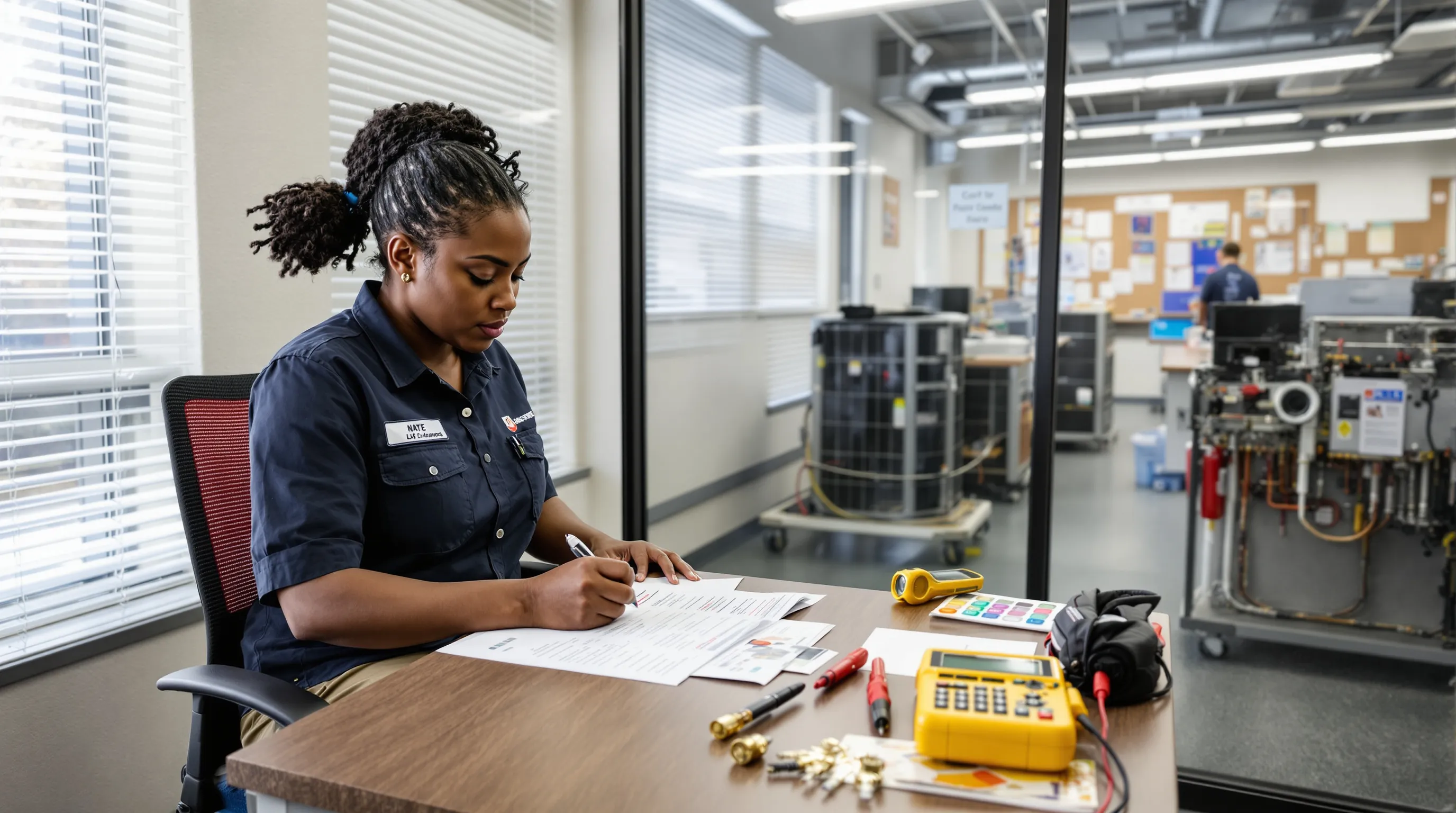
Costs vary by region and program length. Budget for:
- Tuition and fees (certificate vs. associate-level pricing).
- Tools: basic hand tools, meters, and protective gear, some programs include toolkits or offer discounted bundles.
- Exam fees: EPA 608, plus any optional add-ons (like NATE) if you pursue them during or after school.
Ask schools for a full cost-of-attendance sheet so there are no surprises.
Grants, Scholarships, And Employer Sponsorships
Financial aid can make a big difference. Depending on eligibility, you might access:
- Federal and state grants (don’t need to be repaid).
- Scholarships for trades, veterans, or underrepresented groups.
- Work-study or employer sponsorships, some HVAC companies help cover tuition if you agree to work post-graduation.
CBT Technology Institute provides financial aid guidance, scholarships, and dedicated support for military and veteran students. If you’re an international student, verify visa options and any English language requirements, CBT’s ESL program can help you meet proficiency while you train.
Earnings Outlook, Overtime, And Career Growth
HVAC demand remains strong, driven by construction, retrofits, and efficiency upgrades. Techs often see:
- Solid entry-level wages with frequent overtime during peak seasons.
- Pay bumps from certifications (EPA 608 is a must: NATE and specialty credentials add credibility).
- Clear progression: installer/helper → service technician → lead tech → service manager or estimator. Some transition into sales or start their own business.
Certifications, Licensing, And Employability
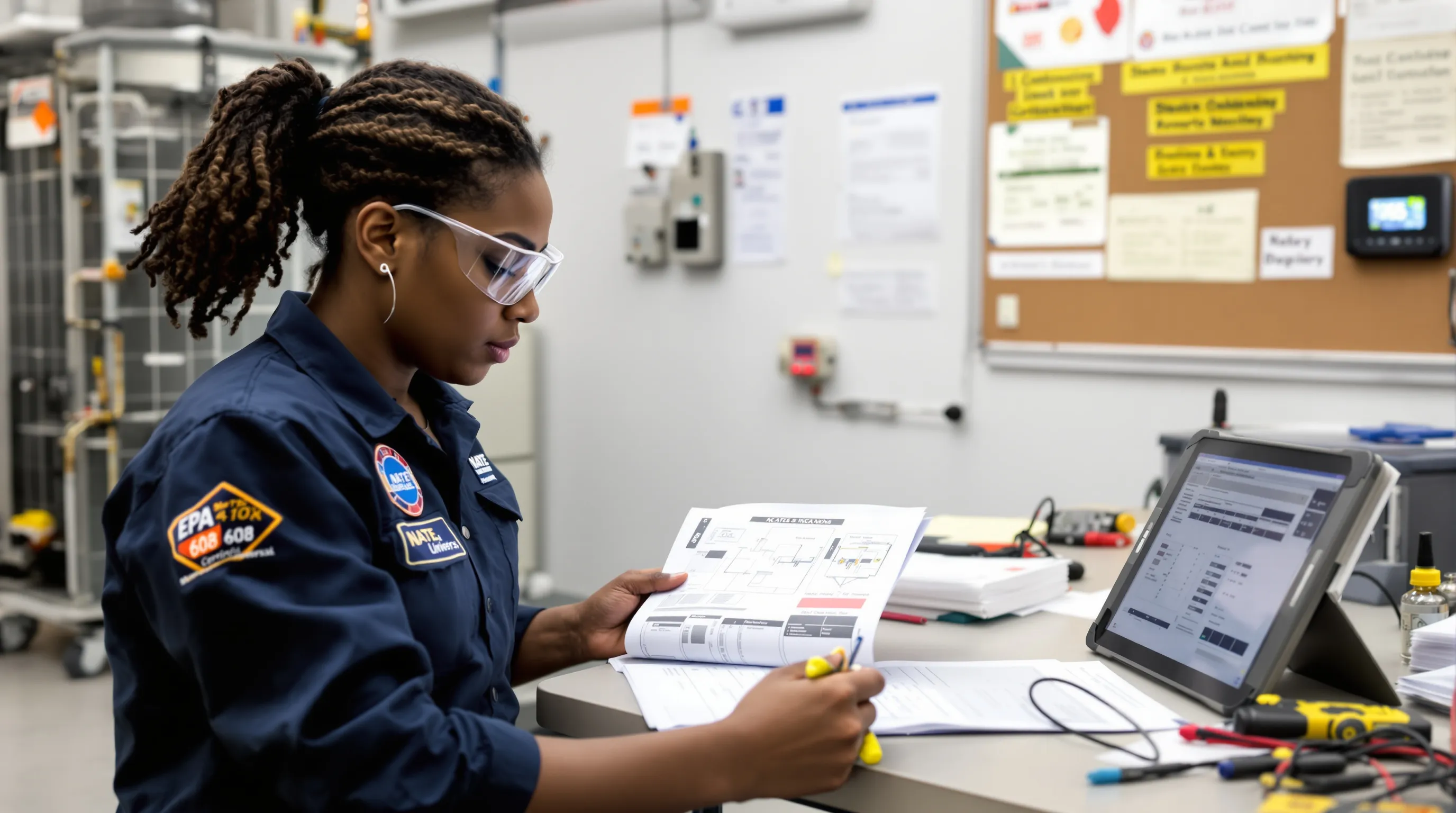
EPA 608, NATE, And Specialty Credentials
- EPA 608: Required nationally for refrigerant handling. Aim for Universal certification to service all equipment types.
- NATE: Recognized by employers: validates troubleshooting across specialties (air distribution, heat pumps, gas furnaces, and more).
- R-410A and manufacturer trainings: Show you can work safely on modern systems and specific brands’ controls.
The more targeted your certifications, the easier it is to stand out for higher-skill roles.
Local/State Registration And Continuing Education
Some states or municipalities require contractor registration, journeyman licensing, or business licenses for those who advance to management or entrepreneurship. Even where not mandated, continuing education keeps you current on codes, refrigerant transitions, and smart controls. Look for schools that host review workshops, proctor exams, or maintain partnerships with local licensing bodies.
HVAC Career Paths And Advancement
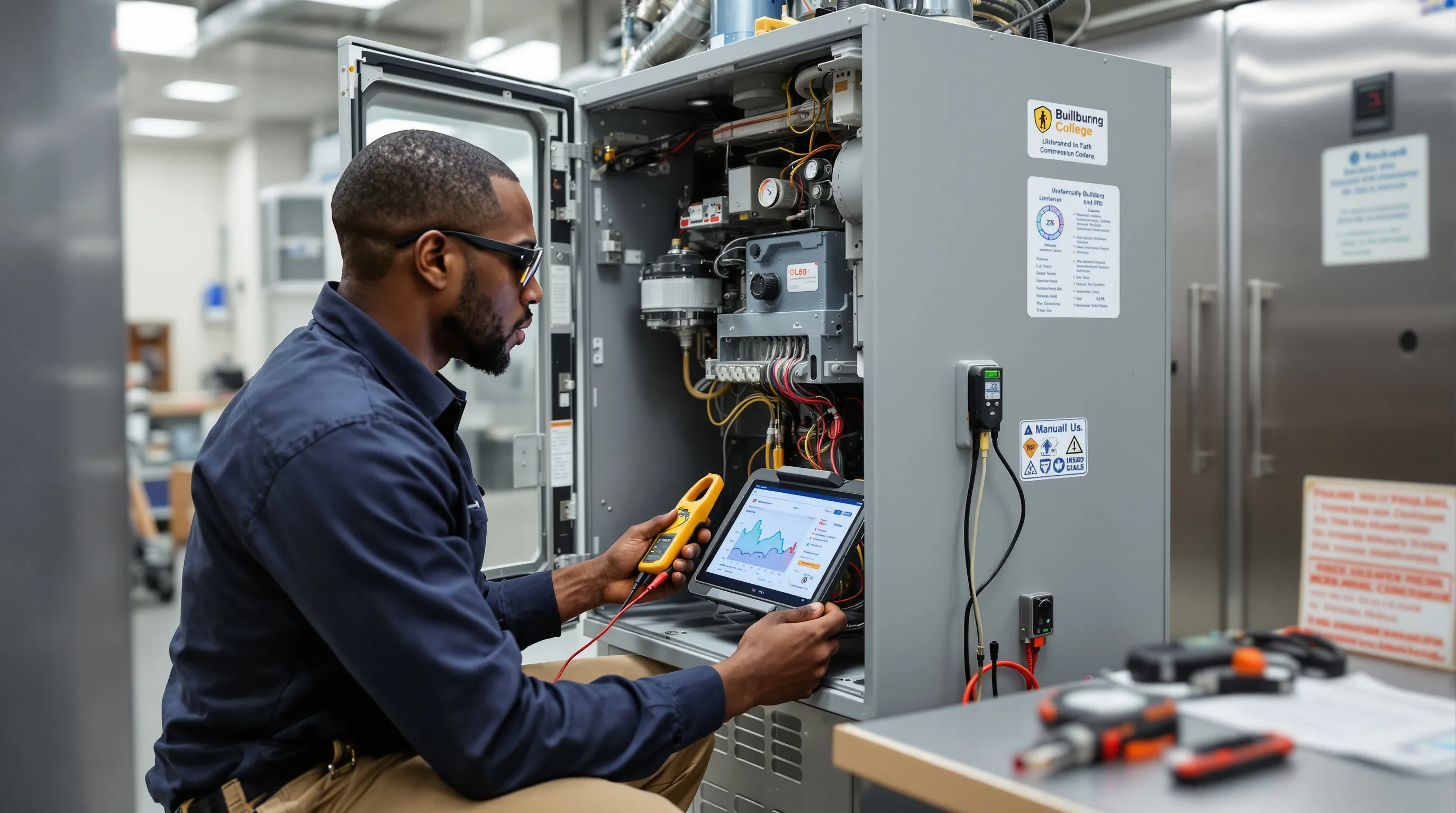
Residential, Commercial, And Refrigeration Roles
- Residential: Installation, maintenance, and service on split systems, heat pumps, indoor air quality, and ductwork. Great for technicians who enjoy customer interaction.
- Commercial: Rooftop units, packaged systems, and light commercial controls. Requires stronger electrical and controls knowledge.
- Refrigeration: Walk-ins, reach-ins, ice machines, and supermarket systems. Demanding but lucrative, excellent for techs who like precision work.
Air conditioning courses that expose you to multiple environments help you choose a niche with confidence.
Energy Efficiency, Controls, And Smart HVAC
Today’s systems are smarter and more connected:
- Variable-speed compressors and ECM motors demand precise diagnostics.
- Building automation systems (BAS) and IoT sensors enable remote monitoring and predictive maintenance.
- Energy auditing and load calculations (Manual J/S/D) create value for homeowners and businesses focused on efficiency.
If you’re tech-curious, add electives in controls or networking. Schools like CBT often cross-pollinate with IT programs, which is useful as HVAC and smart buildings converge.
How To Choose The Right Program
Accreditation, Outcomes, And Instructor Experience
Start with accreditation and outcomes. Ask:
- Is the institution accredited, and do credits transfer?
- What are graduation, certification pass, and job placement rates?
- Do instructors have recent field experience and active certifications?
Career-focused schools such as CBT Technology Institute emphasize job-ready skills and often publish outcome data or connect you with alumni for real talk about results.
Facilities, Lab Resources, And Class Size
Tour the lab. Look for:
- Multiple live systems (heat pump, gas furnace, rooftop unit) and recovery equipment.
- Modern tools: micron gauges, digital manifolds, smart thermostats, and ECM training boards.
- Manageable class sizes so everyone gets hands-on time and instructor feedback.
If possible, sit in on a lab session to gauge pacing and safety culture.
Student Support: ESL, International, Military/Veteran Services, And Transfer Options
Support can make or break your experience, especially if you’re balancing work or moving to the U.S.:
- ESL and bilingual staff for language support (CBT offers robust ESL options).
- International student advising on visas and documentation.
- Military and veteran services for benefits and career placement.
- Credit transfer pathways if you plan to stack a certificate into a diploma or associate degree.
Pro tip: Ask about employer partnerships and career services, resume workshops, interview prep, and local hiring events can shorten your job search.
If you’re in South Florida, consider visiting CBT Technology Institute (https://www.cbt.edu) to compare schedules, labs, and financial aid options side by side with other schools.
Conclusion
Air conditioning courses give you a direct line into a stable, skilled trade, one that rewards problem-solvers who like working with their hands and thinking on their feet. The best programs balance HVAC fundamentals with heavy lab time, prep you for EPA 608, and open doors to NATE and specialty credentials. From short-term certificates to associate degrees, there’s a training path for every timeline and budget, with day, evening, and hybrid formats to fit your life.
As you compare options, prioritize accreditation, instructor expertise, lab quality, and student support, especially if you need ESL, international advising, or military-friendly services. In a market where comfort, energy efficiency, and smart controls matter more than ever, the right air conditioning course can flip the switch on a career with real momentum.